How colonialism eroded Pakistan’s history of religious fluidity
Muslims and Hindus once shared their sacred shrines. This changed post-Partition but some traditions have survived.
![The complex containing the shrine of Ram Thaman, a 16th-century Hindu saint, where the annual festival of Vaisakhi begins in Ram Thaman, Pakistan, this year on April 13 [Haroon Khalid/Al Jazeera]](https://www.aljazeera.com/wp-content/uploads/2020/12/The-complex-of-Ram-Thaman-photo-Haroon-Khalid.jpg?resize=270%2C180&quality=80)
![Sikh pilgrims pray at the Gurdwara Darbar Sahib Kartarpur during the inauguration ceremony of the Kartarpur corridor in Kartarpur, Pakistan, near the Indian border on November 9, 2019 [File: Muhammed Semih Uurlu/Anadolu via Getty Images]](https://www.aljazeera.com/wp-content/uploads/2023/11/GettyImages-1181121203-1-1700039609.jpg?resize=270%2C180&quality=80)
Muslims and Hindus once shared their sacred shrines. This changed post-Partition but some traditions have survived.
The backlash is coming not from ‘extremists’ but nationalists who were made to believe all Hindus are their enemies.

After India’s Babri Mosque was destroyed, a mob in Lahore sought to demolish a temple. Until a local man intervened.
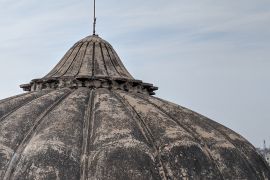
Pakistan reimagines its relationship with its Sikh heritage by opening a key corridor and restoring sites of worship.
![ONLY FOR ESSAY: Guru Nanak and the promise of an inclusive Pakistan [DON''T USE]](https://www.aljazeera.com/wp-content/uploads/2019/11/a83bc1742b33464996b2c429ff4aa1d9_18.jpeg?resize=270%2C180&quality=80)