In Pictures
Climate now a worse crisis than war for Afghanistan’s farmers
Herders forced to sell livestock, farmers flee villages and parents marry daughters off at even younger age amid the crisis.
In Pictures
Herders forced to sell livestock, farmers flee villages and parents marry daughters off at even younger age amid the crisis.
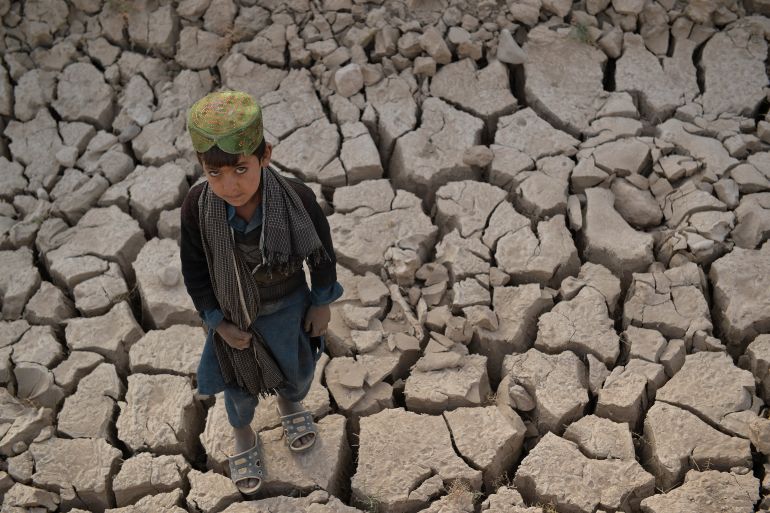
Drought stalks the parched fields around Afghanistan’s remote district of Bala Murghab, where the climate crisis is proving a deadlier foe than the country’s recent conflicts.
As the world watched the Taliban wage a stunning offensive that ended in the rapid collapse of the country’s western-backed government, a longer-term crisis was building.
In desperate attempts to feed their families, herders have been forced to sell their livestock, farmers to flee their villages, and parents marrying their daughters at ever younger ages.
“The last time I saw rain was last year, and there wasn’t much,” Mullah Fateh, the head of the Haji Rashid Khan village in Bala Murghab.
Communities cling to life in small clusters of mud-brick homes among an endless ocean of rolling brown hills in this corner of Badghis province, where 90 percent of the 600,000-strong population live off livestock or fields, according to humanitarian agency ACTED.
“We sold sheep to buy food, others died of thirst,” said Fateh.
When the first of two recent droughts hit in 2018, he had 300 sheep, but as the latest dry spell bites, he is down to 20.
On Monday, United Nations’ agencies said more than 22 million Afghans will suffer “acute food insecurity” this winter, warning the unstable country faces one of the world’s worst humanitarian crises.
Aid-dependent Afghanistan, which has spent decades trapped in cycles of war, has borne the sixth-hardest blow from climate change, driven by greenhouse emissions such as carbon dioxide, according to a study by environmental group Germanwatch.
An Afghan lifestyle causes 0.2 tonnes of carbon dioxide emissions per year, compared with 15 from the average American, World Bank figures show.
As predicted, one of the devastating effects has been a drop in rainfall in northern Afghanistan.
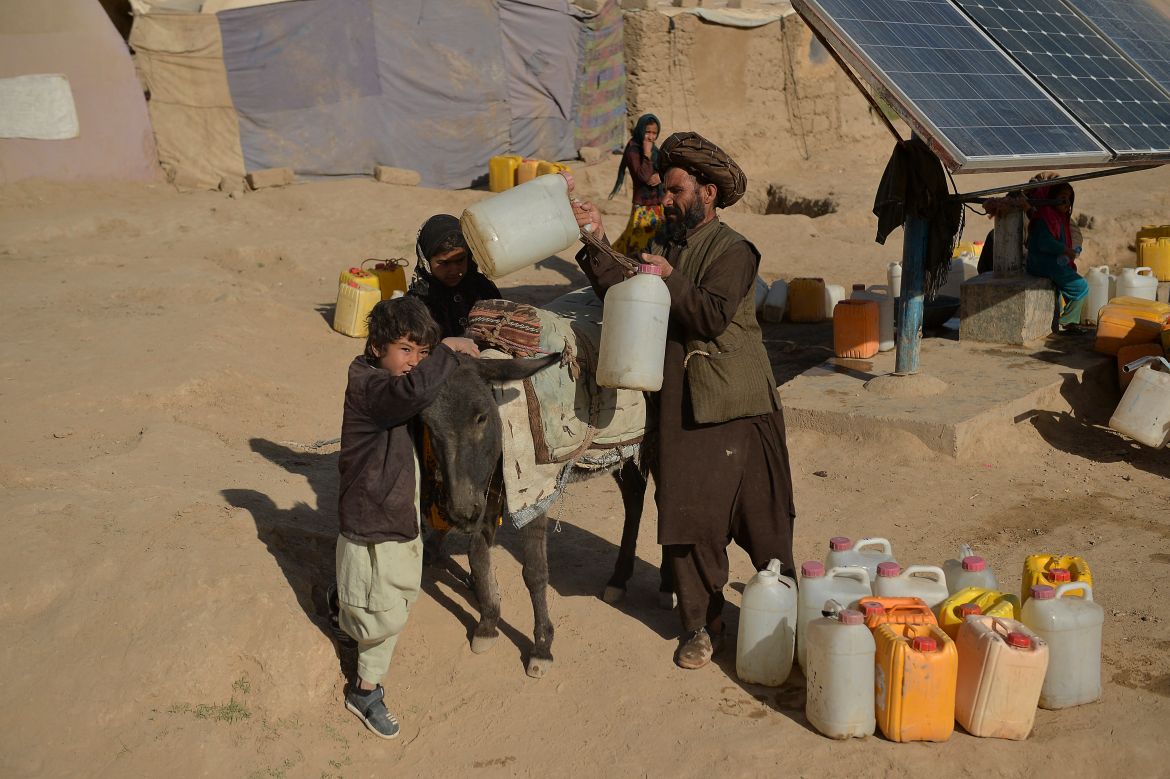
When Mullah Fateh needs to fetch water, he sends young boys and men on a day-long trip with a donkey. This year, he said, two young shepherds died of thirst in the hills.
The thirst attacks not just the body, but family bonds.
This year, 20 families in Haji Rashid Khan village, which has no school and no clinic, sold their very young daughters into marriage, to raise money for food.
“The rest of the children were hungry and thirsty,” explained Bibi Yeleh, a mother of seven whose 15-year-old daughter is already married and whose seven-year-old will soon follow.
If the drought continues, she said, a two and a five-year-old will be next, to be handed over to the groom’s family when they are older.
“The fields are ruined, the animals have nothing. Over the past two years, six people died of hunger,” Haji Jamal said.
Neighbour Lal Bibi said as desperation grows, the “women and children are alone, and in danger”.