In Pictures
Vietnam battles plastic blight in idyllic Ha Long Bay
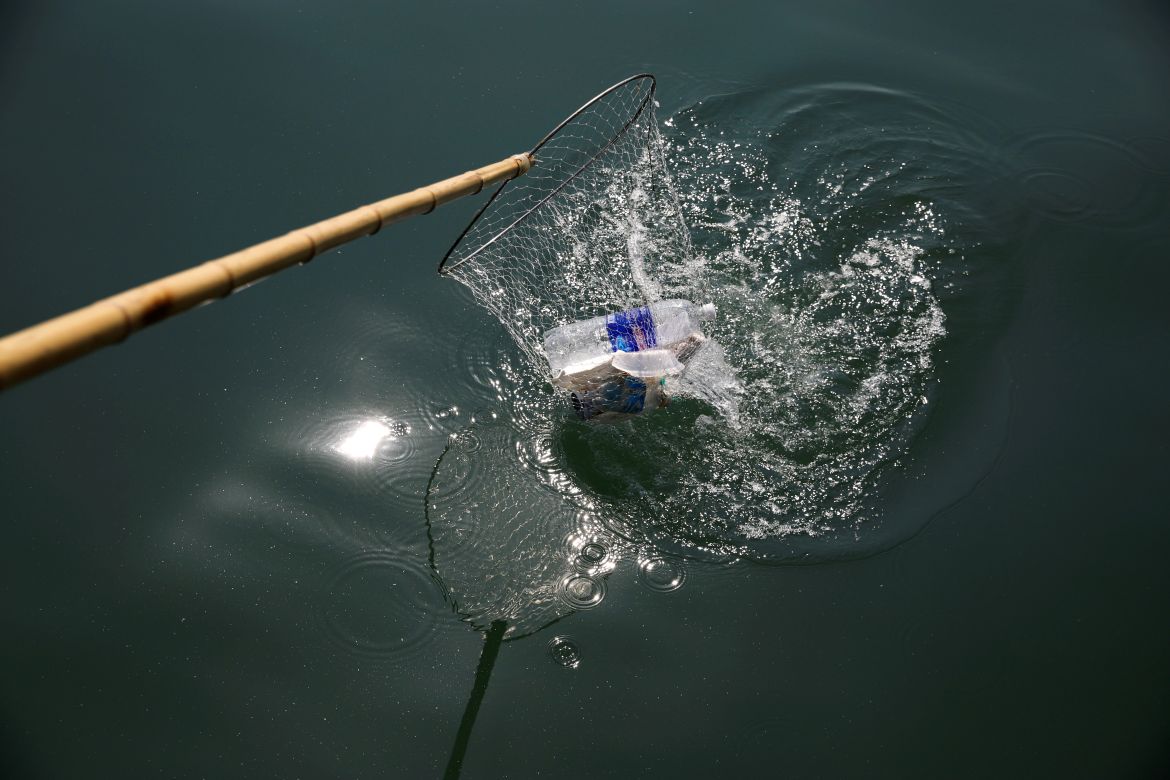
Since the beginning of March, 10,000 cubic metres of rubbish have been collected from the water.
In Pictures
Since the beginning of March, 10,000 cubic metres of rubbish have been collected from the water.

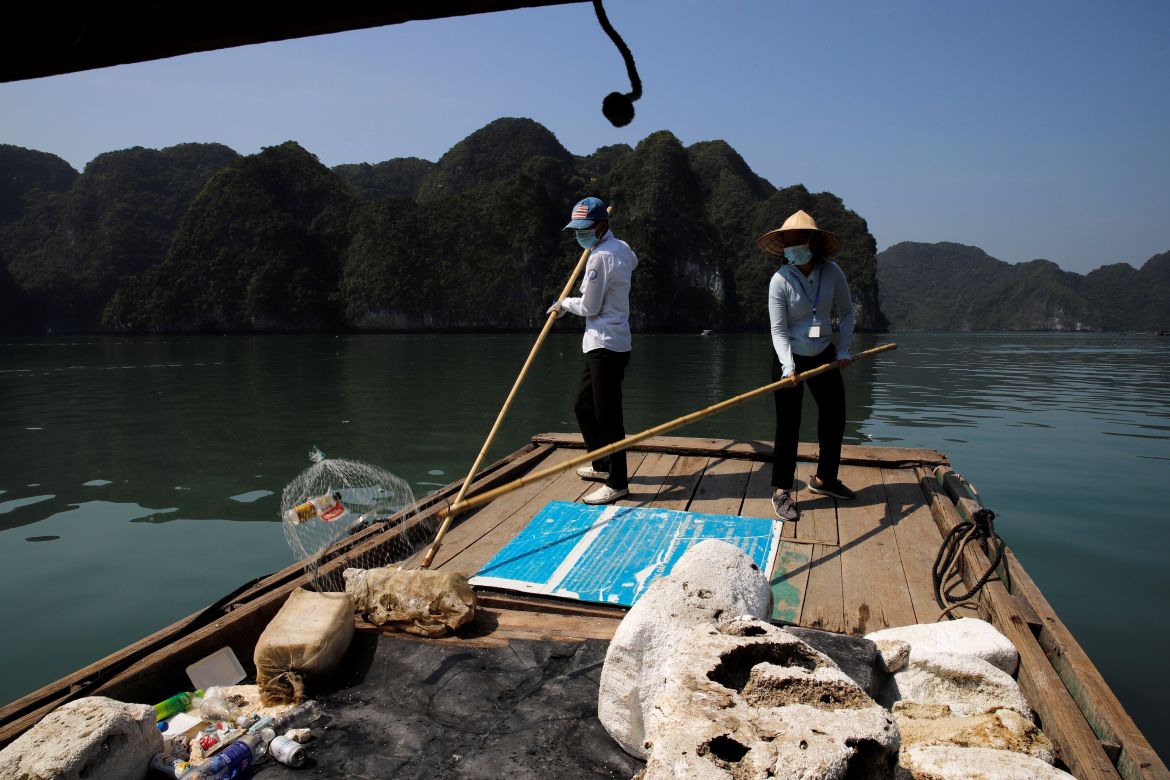
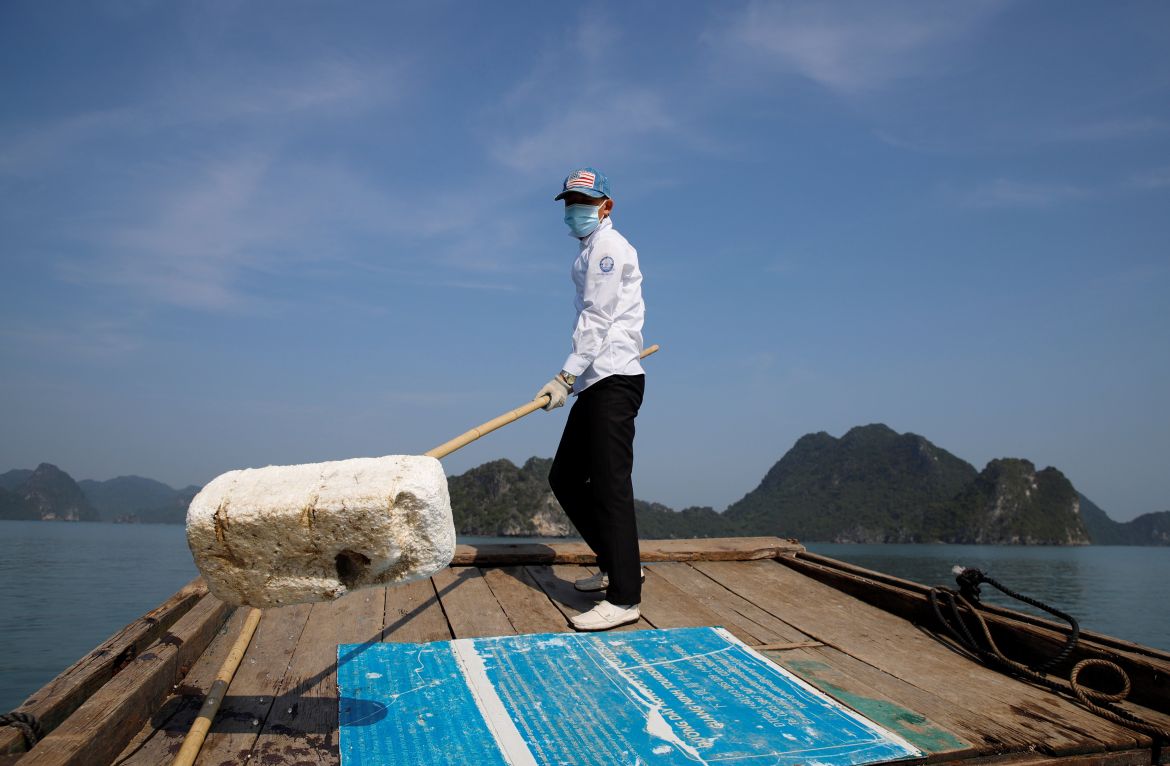
Squinting in the bright light of a hot morning, Vu Thi Thinh perches on the edge of her small wooden boat and plucks a polystyrene block from the calm waters of Vietnam’s iconic Ha Long Bay.
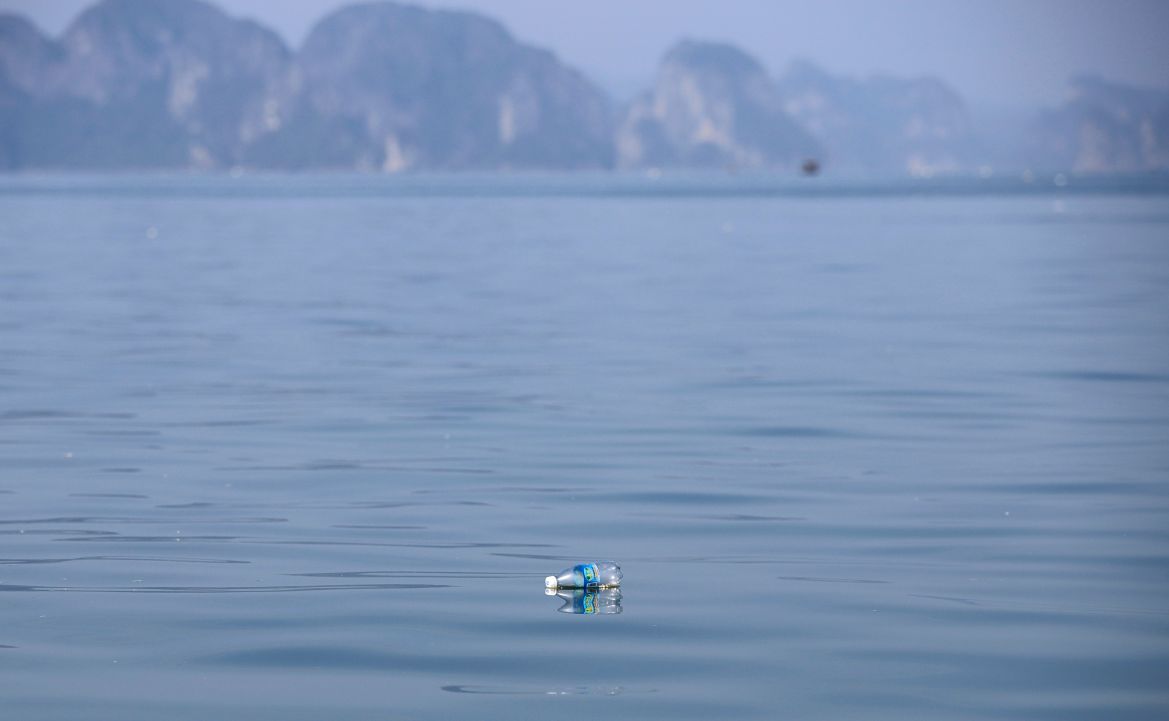
It is not yet 9am, but a mound of collected styrofoam buoys, plastic bottles and beer cans sits behind Thinh in her boat.
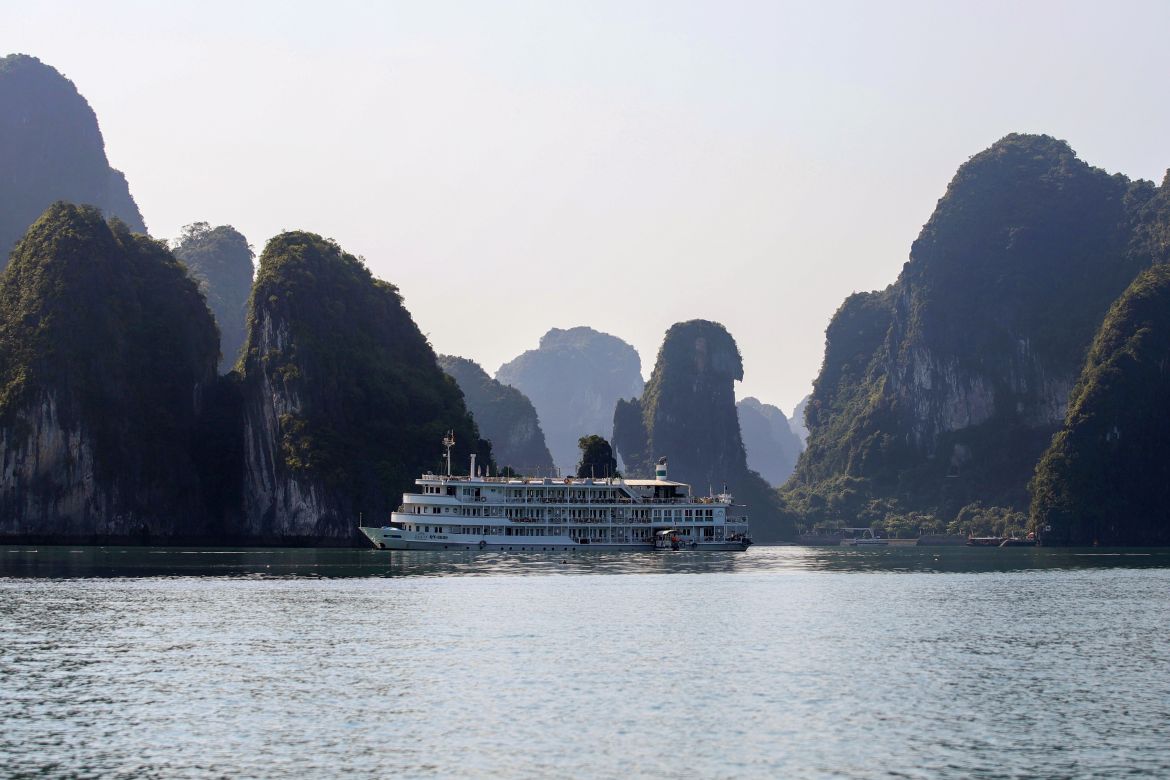
That rubbish is the most visible sign of the human effects that have degraded Ha Long Bay – a UNESCO World Heritage site famed for its brilliant turquoise waters dotted with towering rainforest-topped limestone islands.
“I feel very tired because I collect trash on the bay all day without much rest,” said Thinh, 50, who has worked for close to a decade collecting rubbish.
“I have to make five to seven trips on the boat every day to collect it all,” she says.
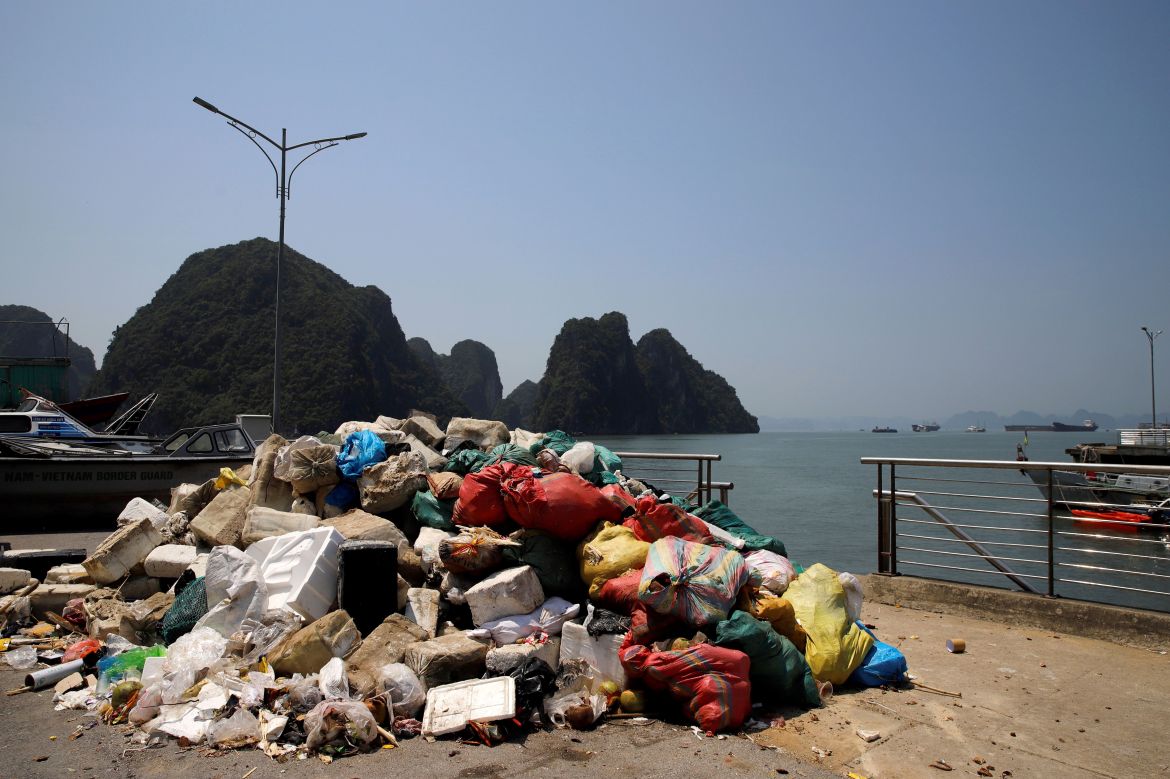
Since the beginning of March, 10,000 cubic metres of rubbish, enough to fill four Olympic swimming pools, has been collected from the water, according to the Ha Long Bay management board.
The rubbish problem has been particularly acute over the past two months, as a scheme to replace styrofoam buoys at fish farms with more sustainable alternatives backfired and fishermen chucked their redundant polystyrene into the sea. Authorities ordered 20 barges, eight boats and a team of dozens of people to launch a cleanup operation, state media reported.
Do Tien Thanh, a conservationist at the Ha Long Bay management department, said the discarded buoys were a short-term issue but admitted: “Ha Long Bay … is under pressure”.
Last year, more than seven million visitors came to see the spectacular limestone karsts of Ha Long Bay, on Vietnam’s northeastern coast.
Authorities hope that number will jump to 8.5 million this year.
But the bay’s popularity, and the subsequent rapid growth of Ha Long city, which is now home to a cable car, amusement park, luxury hotels and thousands of new homes, has severely damaged its ecosystem. Conservationists estimate there were originally about 234 types of coral in the bay, now the number is approximately half of that.
There have been signs of recovery in the past decade though, with coral coverage slowly increasing again and dolphins, pushed out of the bay a decade ago, coming back in small numbers, as a ban on fishing in the core parts of the heritage site increased their food source.
But it is waste, plastic and human, that is still a huge concern.
“There are so many big residential areas near Ha Long Bay,” says Thanh, the conservationist, adding that Ha Long city can handle just over 40 percent of the wastewater it produces.
“The domestic waste from these areas, if not dealt with properly, greatly impacts the ecological system, which includes the coral reefs.”
Single-use plastic is now banned on tourist boats, and the Ha Long Bay management board says general plastic use on boats is down 90 percent from its peak.
Rapid economic growth, urbanisation and changing lifestyles in Vietnam have led to a “plastic pollution crisis”, according to the World Bank. A report in 2022 estimated 3.1 million tonnes of plastic waste was generated every year, with at least 10 percent leaking into the waterways, making Vietnam one of the top five plastic polluters of the world’s oceans.
The volume of leakage could more than double by 2030, the World Bank has warned.