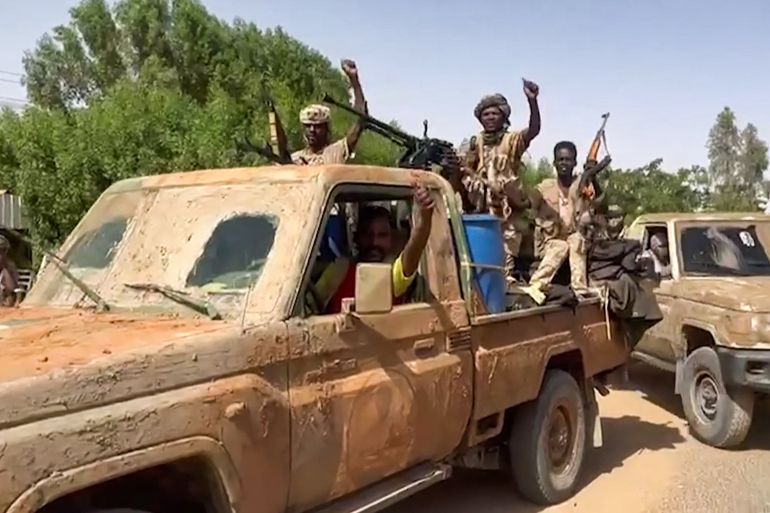
The warring generals have shown little interest in a long-term ceasefire, but have failed to achieve a quick victory.
The latest ceasefire Sudan’s warring factions agreed to, brokered by South Sudan, seems to have deteriorated almost immediately, like all the previous truces so far since fighting began in the country last month.
General Abdel Fattah al-Burhan, the country’s army chief and de-facto leader, and Mohamed Hamdan “Hemedti” Dagalo, who leads the paramilitary Rapid Response Forces (RSF), have continued to battle as the conflict nears the end of its third week.
On Wednesday night, al-Burhan’s envoy Dafallah Alhaj told Al Jazeera that the agreement had been only to a ceasefire, “not to mediation regarding the resolution of the conflict”, dashing fragile hopes that the generals’ agreement to the truce was a sign of progress.
Will the ceasefire that was supposed to begin on Thursday have some partial success? And why have previous ceasefires failed?